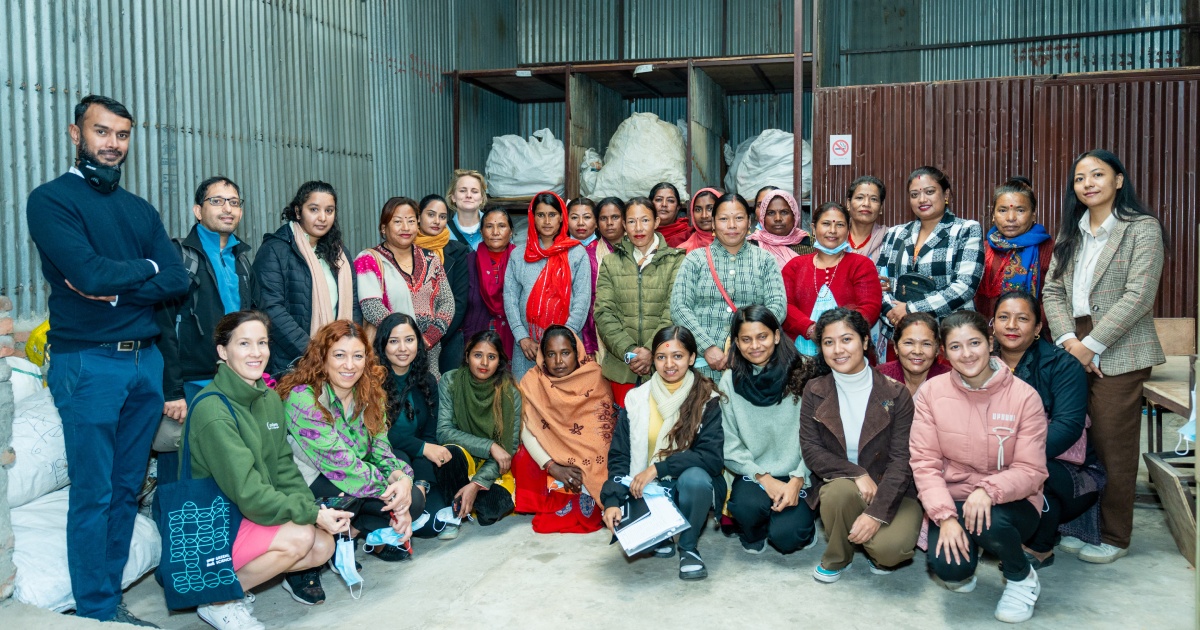
Empowering Informal Workers to Stop Plastic Pollution at the Source
Description
This collaborative project led by GRID-Arendal, NGI, CREASION, Doko Recyclers, and ISWA aimed to prevent plastic leakage into the river systems of the Kathmandu Valley by establishing Decentralized Collection Centers operated by women and informal waste workers. It combined riverbank waste interception, local recycling innovation, and data-driven mapping to divert over 138 tons of plastic from waterways. The project also supported inclusive green employment and laid the foundation for scalable, tech-enabled circular solutions.
Impact
138+
Prevented over 138 tons of plastic waste from entering river systems through structured collection and sorting.
12+
Created jobs for more than 12 individuals, including women and informal waste workers, enhancing local livelihoods.
200+
Delivered waste pickup services to over 200 clients including households, institutions, and commercial enterprises.
100
Installed and operated a plastic shredder for processing over 100 tons of low-value plastics per month.
The project was implemented through a partnership between GRID-Arendal, the Norwegian Geotechnical Institute (NGI), CREASION, Doko Recyclers, and the International Solid Waste Association (ISWA), with the primary objective of preventing plastic waste from entering the river systems of the Kathmandu Valley. The initiative focused on intercepting plastic leakage at the source while simultaneously enhancing the role of informal waste workers, particularly women. To achieve this, Decentralized Collection Centers (DCCs) were established along riverbanks to collect all types of plastic and dry waste. These centers were operated by women-led teams and incorporated workers from the informal sector, creating inclusive local employment opportunities. The project also carried out extensive mapping of plastic waste leakage points through household surveys and community interviews, generating valuable baseline data to inform waste management strategies.
In parallel, Doko Recyclers implemented two fully operational waste collection hubs in Dallu and Budhanilkantha, providing structured collection, sorting, and processing services to over 200 clients. These hubs also served as sites for piloting low-cost and locally appropriate recycling technologies, including the development and installation of manual balers and a plastic shredder. The shredder, integrated into Doko’s Material Recovery Facility (MRF), enables the processing of low-value plastics, such as multi-layered packaging and single-use plastics, into composite plastic boards and Refuse-Derived Fuel (RDF). This helped divert plastics from landfills and open environments, contributing to a more circular and sustainable waste system. Additionally, the project provided training to women waste workers on occupational health and safety, social and environmental accountability, and waste handling best practices. The initiative laid the groundwork for future scale-up, including digital systems to connect decentralized waste operators with large-scale aggregators and explore opportunities for carbon financing through sustained plastic waste diversion.