



Advancing Low-Value Plastic Recovery through the Establishment of a Semi-Automated Processing Facility in Kathmandu Valley
Description
Our project addresses this critical issue by establishing a semi-automated Plastic Recovery Facility in Kathmandu Valley,which is located in Sallaghari,Bhaktapur with the capacity to process 1,000–1,200 tons of mixed-grade plastics annually. Focused on low-value plastics, this facility will fill a major gap in Nepal’s waste management infrastructure.
Impact
5
The Plastic Recovery Facility (PRF) established under the PLEASE Project can process up to 5 tons of plastic waste per day.
119+
Plastic waste recovered: 119 tons extracted from a total of 241 tons of mixed waste processed.
367+
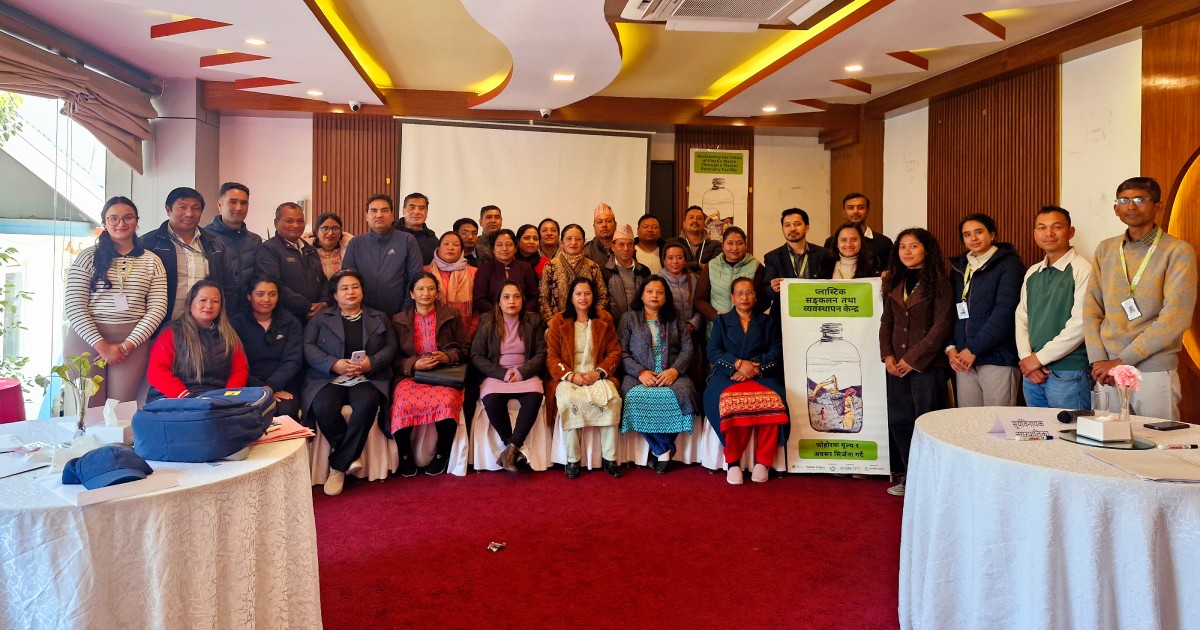
A total of 367 individuals were trained on GBV,PSEA .GESI and waste management.
6
A total of 6 municipalities were engaged: Bhaktapur, Changunarayan, Madhyapur Thimi, and Suryabinayak,Kathmandu and Lalitpur
81
81 individuals from housing colonies trained in waste segregation.
Nepal generates a significant volume of plastic waste every year, but an estimated 70% of it ends up in unmanaged open areas—landfills, riverbanks, forests, and streets—creating widespread environmental degradation and contributing to climate change through long-term pollution and emissions. The informal waste sector, which is the backbone of Nepal’s recycling system, generally prioritizes the collection of high-value plastics such as PET (polyethylene terephthalate), HDPE (high-density polyethylene), and LDPE (low-density polyethylene). Meanwhile, low-value plastics—such as Single Use Plastics (SUPs), multilayer plastics (MLPs), and composite plastics—are rarely recovered due to their poor market demand, difficult recyclability, and lack of processing infrastructure.
This project takes a direct and systemic approach to closing that gap. At its core is the development of a semi-automated Plastic Recovery Facility located in Sallaghari, Bhaktapur, within the Kathmandu Valley. This facility is designed to process between 1,000 and 1,200 tons of low-value mixed-grade plastics annually. By incorporating semi-automated segregation and processing technology, the facility will be capable of sorting and recovering materials that otherwise pollute the natural and urban environment for generations. The infrastructure will act as a vital node within a broader circular waste ecosystem, contributing directly to national goals on climate resilience, green recovery, and environmental justice.
To support the operations of this facility, the project is working closely with municipalities in Kathmandu, Bhaktapur, and Lalitpur to build a plastic-specific value chain—from segregation and collection at source to final processing and recovery. Special emphasis is being placed on strengthening local collection systems for low-value plastics and improving linkages between informal waste workers and formal processing actors. The project also includes a robust community engagement and training component, which focuses on improving waste identification, segregation practices, and raising awareness about the environmental impacts of unmanaged plastics.
The project envisions long-term sustainability through partnerships with organizations involved in plastic repurposing, upcycling, and material innovation. By anchoring low-value plastics in a circular economy framework, this initiative seeks to not only reduce pollution but also create green jobs, uplift waste worker livelihoods, and catalyze broader systemic change in how plastic waste is managed in Nepal.
Partner Logo


