

By Asmita Ranabhat
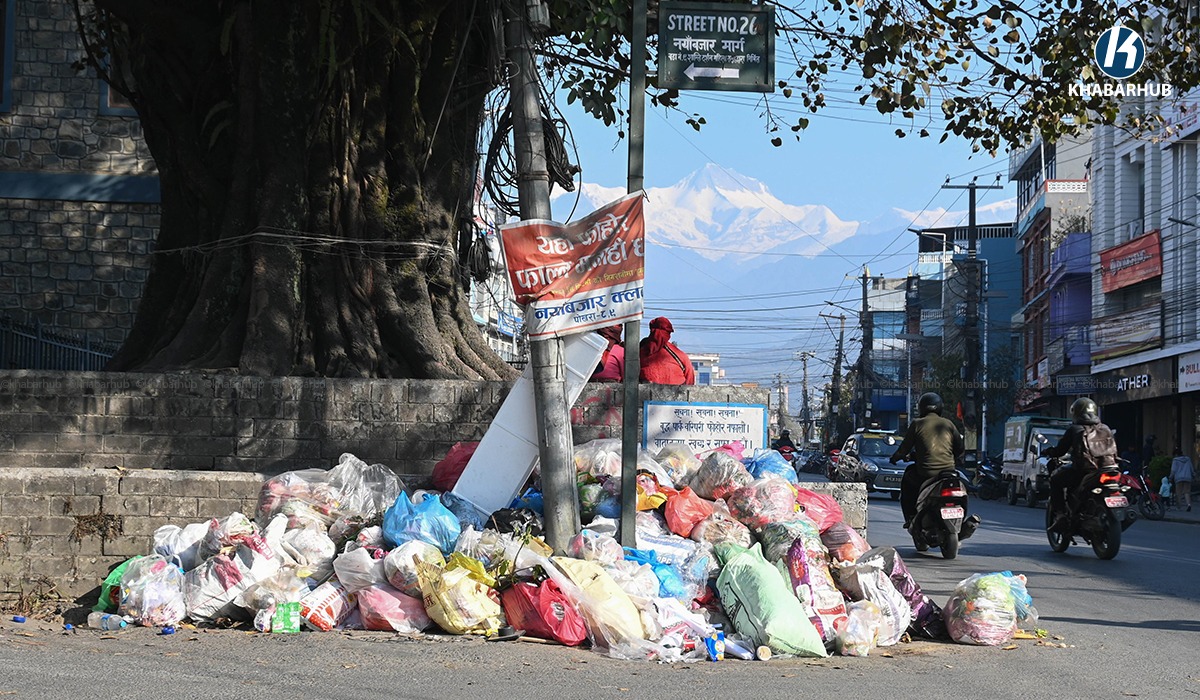
We often stop to capture the breathtaking beauty of the mountains. But the moment we notice a plastic bottle or food wrapper in the corner of the frame, our instinct is to change the angle, crop the image, or edit the waste out. We proudly share the snow-capped peaks while leaving the litter out of the picture.
But removing waste from a photograph does not remove it from our environment.
Instead of asking how to keep waste out of the frame, perhaps we should ask a more important question: Why is it there in the first place, and what can we do to ensure it is no longer part of the landscape?
The waste we choose to ignore does not simply disappear. It remains in our surroundings, moves into drains and rivers, pollutes our land and air, and creates problems that extend far beyond what we can see. This is why waste management is not only an environmental issue. It is also an issue of human behaviour, responsibility, systems, and collective action.
Every day, we generate waste without giving much thought to where it goes after we throw it away. A plastic bottle, food wrapper, leftover food, or old mobile phone may seem insignificant when considered individually. But when the same behaviour is repeated by thousands of households, businesses, institutions, and communities, the amount of waste becomes a major environmental challenge.
In growing cities such as Pokhara, increasing urbanization, changing lifestyles, and rising consumption are contributing to greater waste generation. As the volume of waste increases, so does the pressure on collection systems, treatment facilities, and landfill sites.
Source: https://khabarhub.com/
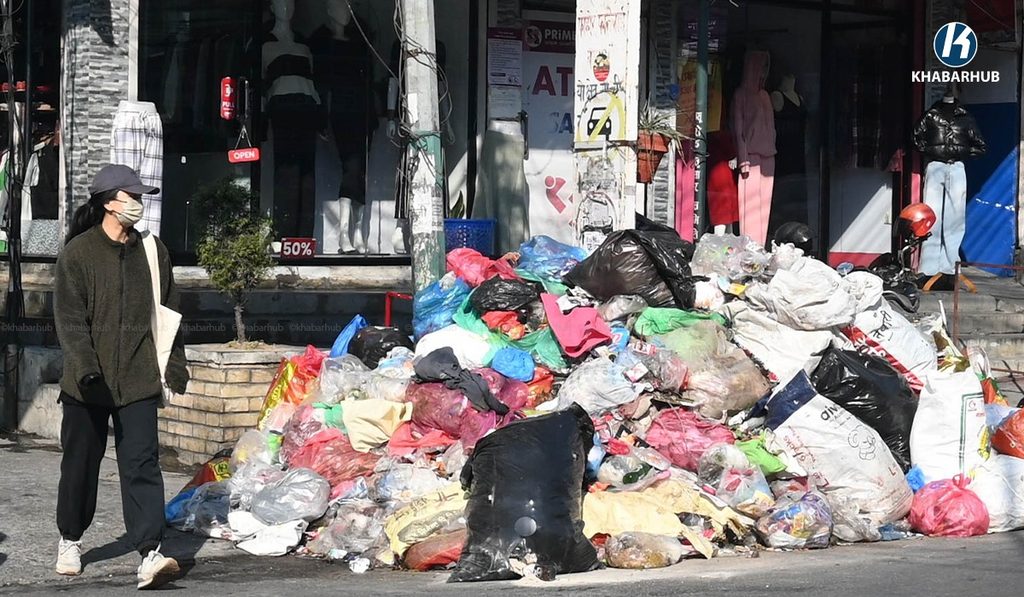
The problem becomes even more serious when waste is mixed together, openly dumped, or burned. Improper waste management can contribute to air, water, and soil pollution and can also increase greenhouse gas emissions. More importantly, when recyclable and organic materials are mixed with other waste, valuable resources are lost. What could have been recycled, composted, reused, or recovered instead becomes waste destined for disposal.
This is where the idea of a circular economy becomes important.
A circular economy asks us to rethink the way we produce, consume, and dispose of products. Instead of following the traditional “take, make, and throw away” (linear) model, it aims to keep materials and products in use for as long as possible through reducing, reusing, repairing, recycling, repurposing, and rethinking. In this approach, waste is not simply something to be discarded; it can also be a resource, a material for innovation, and an opportunity for green jobs and businesses.
The problem becomes even more serious when waste is mixed together, openly dumped, or burned
However, a circular economy cannot be built through individual action alone. It requires an effective system and cooperation among individuals, communities, businesses, municipalities, governments, recycling organizations, and development partners. No single stakeholder can address the waste challenge alone.
For this reason, supportive policies and effective infrastructure are essential. Nepal’s Waste Management Bill, 2083 has been registered in the Federal Parliament and is currently under consideration. The proposed framework places emphasis on source segregation, integrated waste-processing systems, transfer stations, classified public waste bins, economic sustainability, public-private partnerships, and clearer roles among different levels of government. The Bill also proposes separate collection and transportation of segregated waste through three-compartment vehicles. This would allow recyclable materials, organic waste, and landfill waste to be transported separately to appropriate facilities, such as recycling and material recovery facilities, composting centres, and landfills.
These proposed measures reflect an important shift in the way waste can be understood and managed: moving away from the traditional approach of simply “collecting and throwing away” and toward segregating, processing, recovering, and converting waste into resources.
Yet, even the strongest policies and the best infrastructure cannot solve the problem if our behaviour remains unchanged.
A waste segregation system, for example, depends on people actually separating waste at source. Recycling facilities can only recover materials effectively when recyclable waste reaches them in usable condition. Composting systems require organic waste to be separated from other materials. Similarly, public bins and collection services can only be effective when people use them responsibly.
This is why behavior change must be at the centre of sustainable waste management.
Real change can begin with simple everyday decisions: buying only what we need, refusing unnecessary single-use plastics, carrying reusable alternatives, separating waste at source, composting organic waste, repairing products instead of immediately replacing them, and choosing reusable or recyclable materials whenever possible.
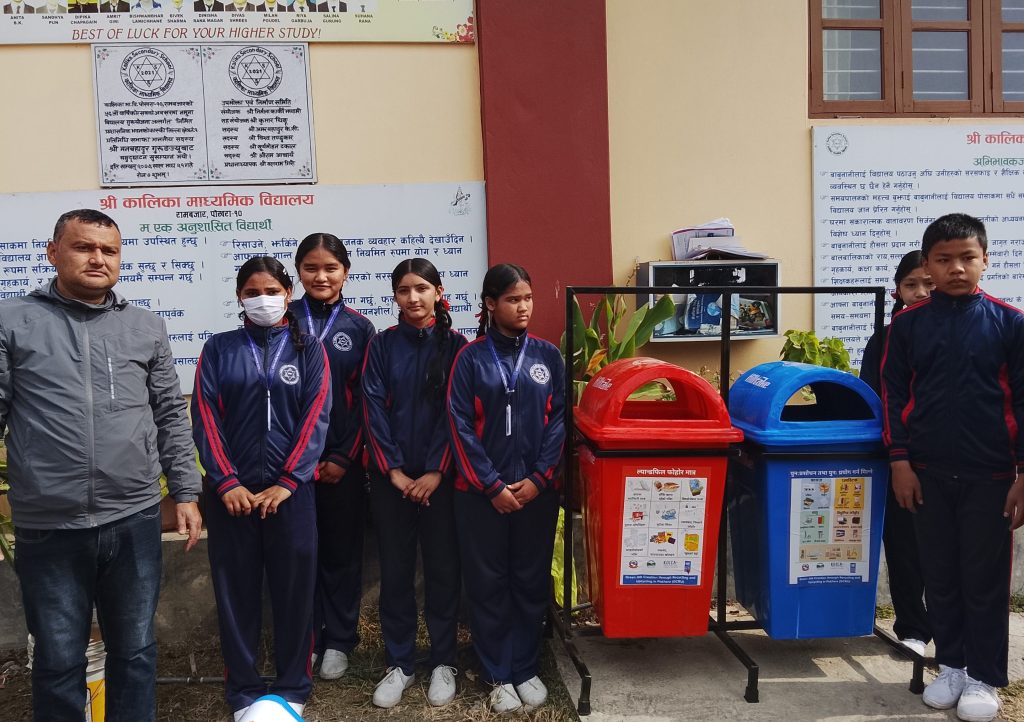
Schools, workplaces, businesses, and communities can also play an important role in building these habits. However, awareness alone is not enough. People need practical opportunities, convenient systems, clear information, and consistent encouragement to turn awareness into everyday action.
Waste management should therefore not be seen only as the responsibility of waste workers, municipalities, or recycling companies. Each of us has a role in determining what happens to the materials we consume and discard. We are not only waste generators; we are also decision-makers.
The future of sustainable waste management depends not only on better infrastructure, innovative technologies, and supportive policies, but also on how willing we are to change our everyday behaviour.
Perhaps, the next time we stand in front of a beautiful mountain landscape, we will not need to change the angle, crop the image, or edit the waste out of the picture.
That change begins with us.