

By Pragya Neupane
Empowering Young Leaders: My Inspiring Journey with the Green Job Creation through Recycling and Upcycling Project Pokhara 2025
There are some projects that remain in your professional memory, and then there are those that quietly become personal. The Recycling and Upcycling Program implemented across schools in Pokhara was one of those personal experiences for me.
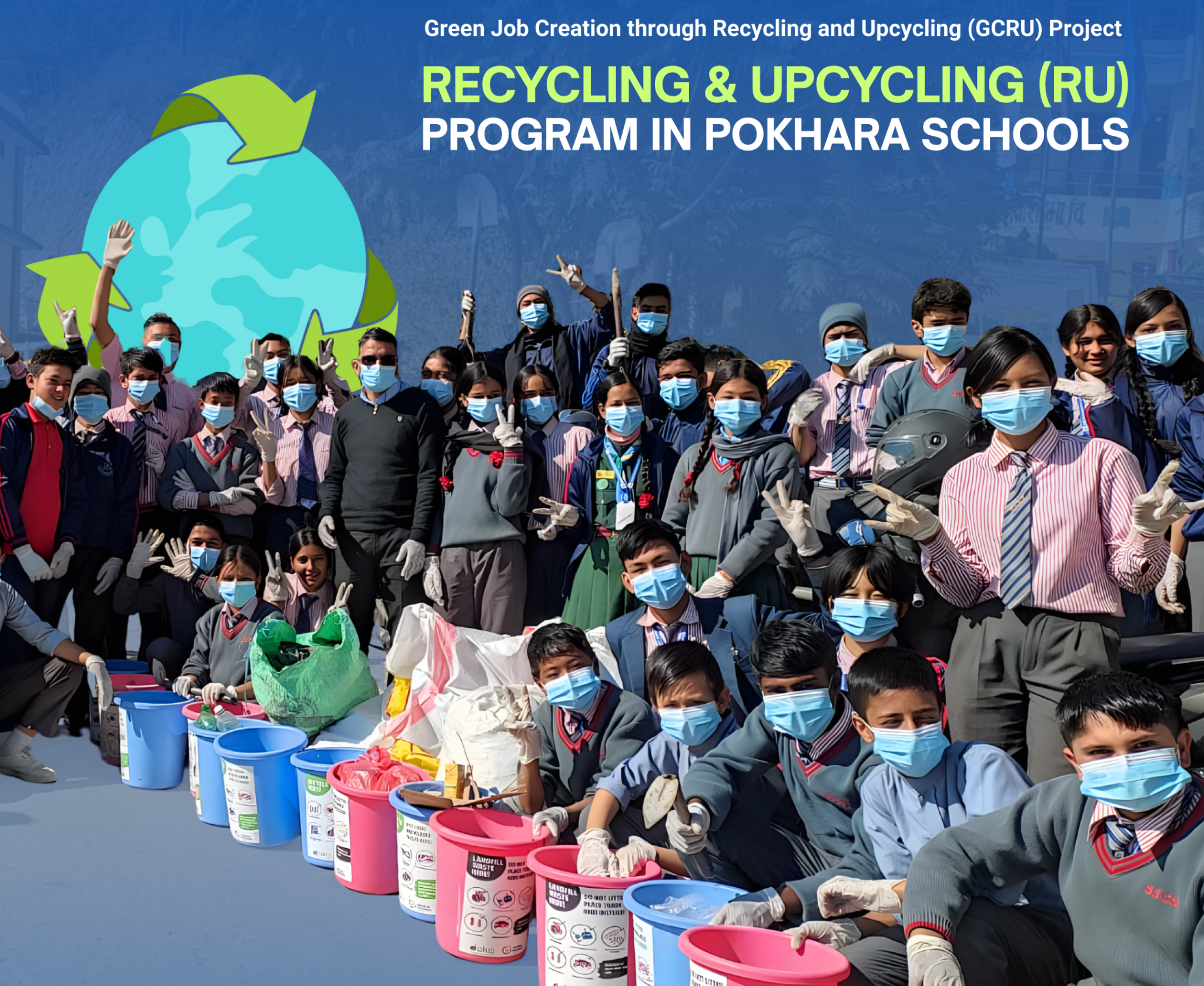
The project was implemented under the Green Job Creation through Recycling and Upcycling initiative, with the vision of introducing sustainable waste practices in schools and nurturing young environmental leaders. Pokhara, a rapidly growing city, faces increasing waste management challenges. A large portion of waste is still disposed of without proper segregation by material type, making it essential to shift towards a more circular approach where waste is treated as a resource.
This is where the idea of working with schools came in. Schools are not just institutions of learning, they are spaces where habits are formed. If students begin to understand waste, source segregation, and sustainability early on, the impacts go far beyond the classroom.
The journey began with identifying and selecting schools across Pokhara Metropolitan City. A structured and transparent process was followed, starting with mapping schools, inviting applications, evaluating them based on readiness and interest, and finally conducting field visits. Out of 27 applications, 15 schools were selected, ensuring representation across different wards.
Once the schools were finalized, the next phase focused on building capacity. Teacher orientation workshops were conducted to introduce the concept of recycling, upcycling, and circular economy practices. These sessions were not just theoretical,they were hands-on and participatory.Teachers actively participated in discussions, planning exercises, and even hands-on upcycling activities. This helped them visualize how these ideas could be implemented within their schools.
Following this, two-day workshops were conducted for student members of the Recycling & Upcycling (RU) Clubs. These workshops were designed to be interactive, practical, and engaging. Students learned about waste segregation, the 7R (Rethink, Refuse, Reduce, Reuse, Repair, Recycle, and Rot) principles, and how to convert everyday waste into useful products. More importantly, they learned how to lead. RU Clubs were established in all 15 schools with clearly defined roles, giving students ownership of the program.
One of the most enriching parts of the project was the exposure visits. Students visited recycling and upcycling enterprises, where they saw the real journey of waste. From collection to processing and finally to product creation, they experienced the concept of circular economy in action. For many of them, this was their first exposure to the idea that waste could also be a source of livelihood.
The program then moved into the implementation phase within schools. Students conducted waste audits, led awareness campaigns, organized clean-up drives, and carried out upcycling activities. They engaged not only with their peers but also with their communities. The energy they brought into these activities was remarkable!
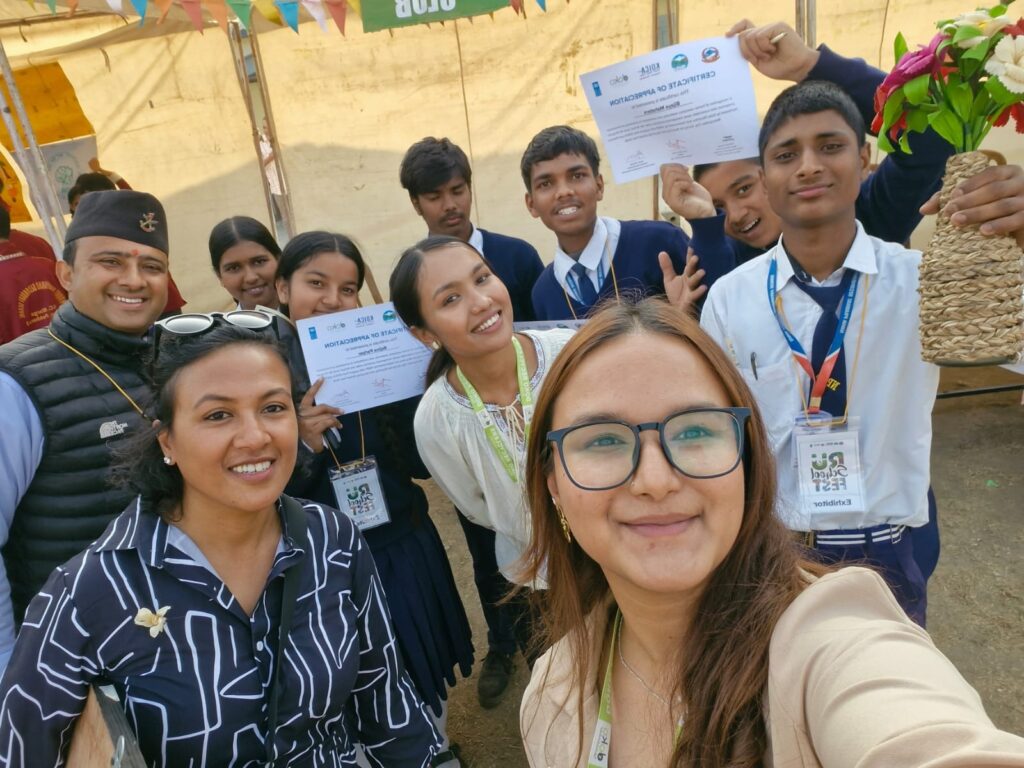
The project concluded with a school-level RU Fest where all participating schools showcased their work. It was more than just an event. It was a celebration of effort, creativity, and learning. Students presented their projects, displayed upcycled products, and shared their experiences.
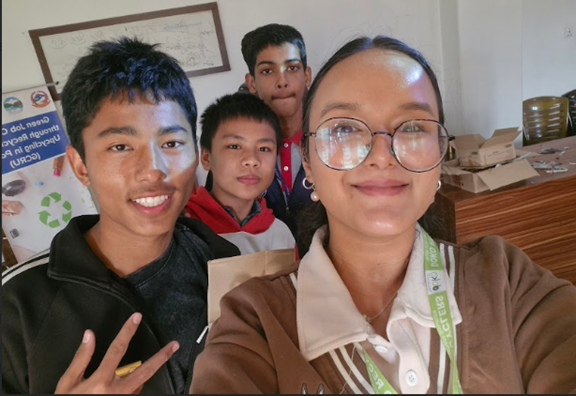
One of the most meaningful aspects of this journey was the connection built with students. Interacting with them never felt like a formal responsibility. It felt natural and genuine. They were curious, expressive, and incredibly creative. Teaching them upcycling techniques was just one part of the experience. Learning from their perspectives and ideas was equally valuable.
A particularly memorable example of this was working with students from Shree Nawaprabhat Secondary School. Despite having fewer resources and limited exposure, their enthusiasm, participation, and commitment were exceptional. They approached every activity with a kind of resourcefulness and ingenuity that was genuinely humbling, finding creative solutions with whatever was available, rather than waiting for ideal conditions. It was a reminder to me that constraints can sometimes be the very thing that sparks creativity
Another highlight was the feedback received from students. Many of them reached out personally after sessions, expressing how much they enjoyed the workshops and how they wanted to continue these activities. These moments made the entire experience more meaningful than any numbers or reports could capture.
In terms of achievements, the project successfully established 15 functional RU Clubs across schools. Around 315 individuals were directly involved, including students and teachers. A total of 991 kilograms of waste was recycled and processed, and more than 300 upcycled products were created. The program also organized 22 awareness events, reaching over 8,000 people directly and many more indirectly.
Beyond the numbers, the most important achievement was the shift in mindset. Students began to see waste differently. It was no longer something to discard but something that could be reused, repurposed, and valued.
Like any project, there were challenges. Academic schedules often conflicted with planned activities, limiting the time available for engagement. There were also differences in institutional readiness between schools, especially between private and government institutions. In some cases, teacher turnover affected continuity. Additionally, varying levels of prior knowledge among students meant that more time had to be dedicated to basic concepts.
However, these challenges also brought important learnings. The need for early planning, stronger institutional support, and integration of such programs into the formal curriculum became very clear. It also highlighted the importance of flexibility and continuous engagement.
Looking back, this project was not just about waste management. It was about people. It was about students discovering their voice, taking initiative, and realizing that they can create change. It was about building connections, sharing ideas, and learning together.
For me, it was a reminder that meaningful change often starts small. Sometimes, it begins with a group of students, a few discarded materials, and the belief that things can be done differently.