

By Janney Kayastha
I am an environmental science student working at a company that handles recyclable waste every day. I know this system from the inside. And I still cannot do anything useful with my chocolate wrapper after I finish eating.
That’s not a small admission. It’s actually the point.
What are Low-Value Plastics?
Not all plastic waste is treated equally in Nepal’s waste management system. There is an informal but very real hierarchy and at the bottom of it sits what the industry calls low-value plastics (LVPs). Plastics make up roughly 12–20% of municipal solid waste in Nepal. Municipal solid waste refers to everyday waste generated from households, shops, institutions, and public spaces, including both organic and inorganic materials. Within this overall waste stream, a significant share of this consists of flexible, low-value materials such as multilayer packaging (World Bank, 2020; SWITCH-Asia, 2025).
Chocolate wrappers fall into this category. So do noodle packets, chips bags, and most of the flexible film packaging we go through every day. What makes them low-value isn’t just their size, but their composition.
A chocolate wrapper is not a single material. It is several layers bonded together, typically a food-grade plastic film on the inside, a metallic or aluminium barrier layer in the middle to protect against moisture and light, and a printed outer surface for branding. This structure, known as multilayer plastic (MLP), is engineered specifically for shelf performance. It keeps food fresh, resists damage, and prints well.
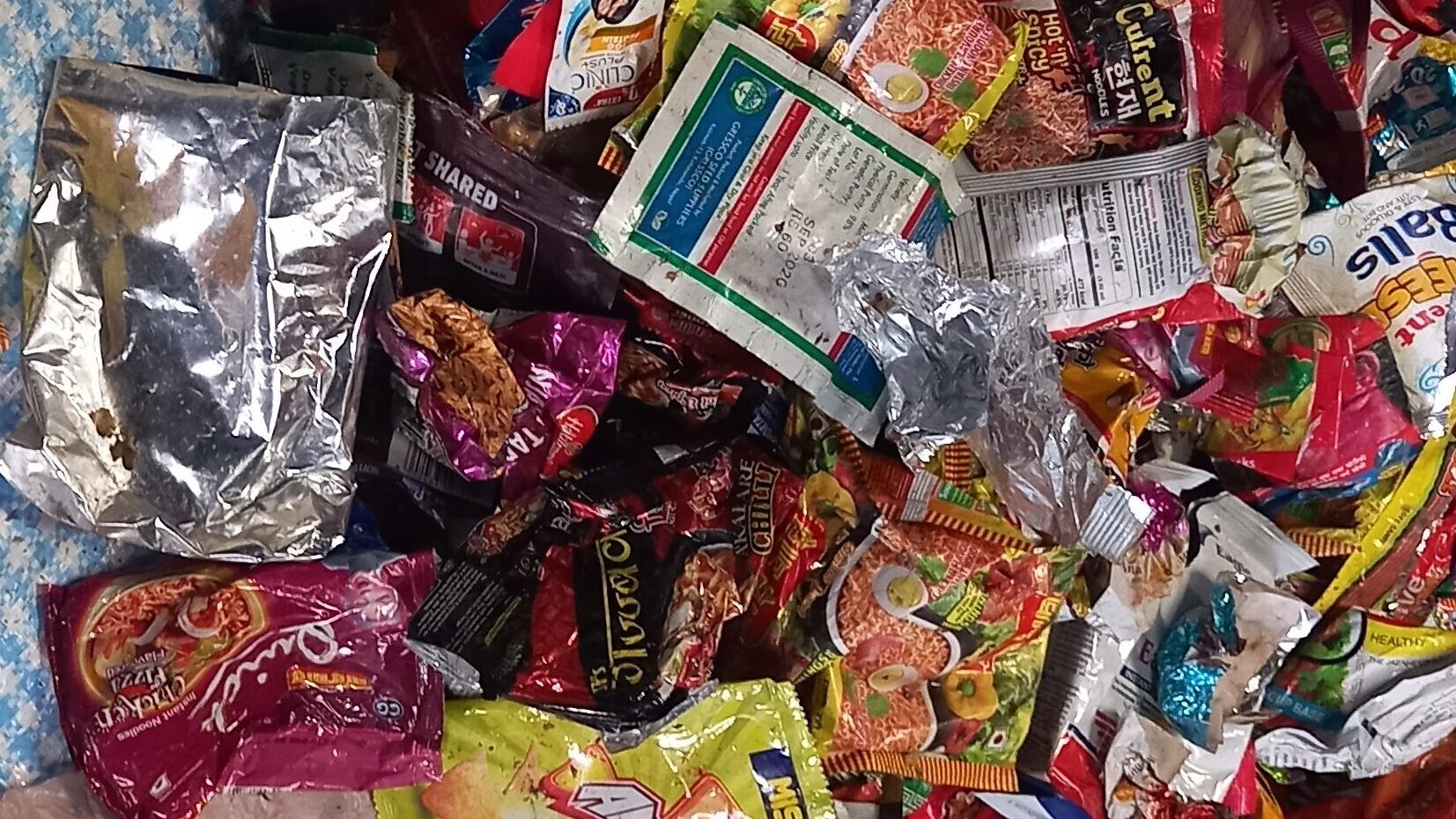
What it does not do is come apart. The layers are fused together so effectively that separating them for recycling is technically and economically impractical. Nepal currently has no facility capable of processing multilayer plastics into recoverable material. That single fact shapes everything that follows.
In many South Asian waste streams, flexible plastics like these make up more than half of total plastic waste, yet remain largely unrecyclable under current systems.
Why does the Collection System Skip LVPs?
Kathmandu’s plastic recovery depends heavily on its informal waste sector, the cycle hawkers and waste pickers who move through neighbourhoods daily, buying recyclables and selling them up a chain to scrap dealers and processors. This network is remarkably efficient for what it was built around. PET bottles move through it reliably. So do paper, metal, and certain hard plastics. These materials have established buyers, established prices, and an established chain.
Chocolate wrappers have none of that.
A cycle hawker making collection decisions on the streets is running a business on thin margins. Every material they carry has to justify the effort, the transport, the sorting, the washing, the selling. For a chocolate wrapper, that calculation collapses immediately. There is no scrap dealer in Kathmandu who will buy a sack of multilayer wrappers, because there is no processor capable of handling them, and no viable end market even if there were.
This is something I observe directly in my work. The materials our company handles move because there is an end market for them. Low-value plastics have no destination in the formal or informal recycling chain. So they are left behind, not out of negligence, but out of economic logic that the current system has no answer for.
Where do they End Up?
Once a chocolate wrapper is skipped by the collection system, its path is largely determined by geography, weather, and chance.
A portion reaches the landfill site through municipal collection. There, multilayer plastics will persist for centuries without meaningful degradation, slowly fragmenting into microplastics that leach into surrounding soil and groundwater. In some limited cases, small volumes of these materials are intercepted and used in downcycling applications such as plastic lumber for outdoor furniture, as an additive in road construction, or upcycled products. While these uses can delay environmental leakage, they remain small in scale, require significant aggregation, and do not offer a circular solution, as the material cannot be recovered after use.
A significant share never makes it to landfill at all. Lightweight flexible plastics are highly mobile; rain carries them into drainage channels and drains lead to rivers. The evidence is visible to anyone who has walked along the Bagmati, Bishnumati, Tukucha, or any moving waterway in Nepal really. The majority of what comes out of those rivers is not bottles. It is wrappers, sachets, single use bags, and film plastics, the materials the collection system had no use for.
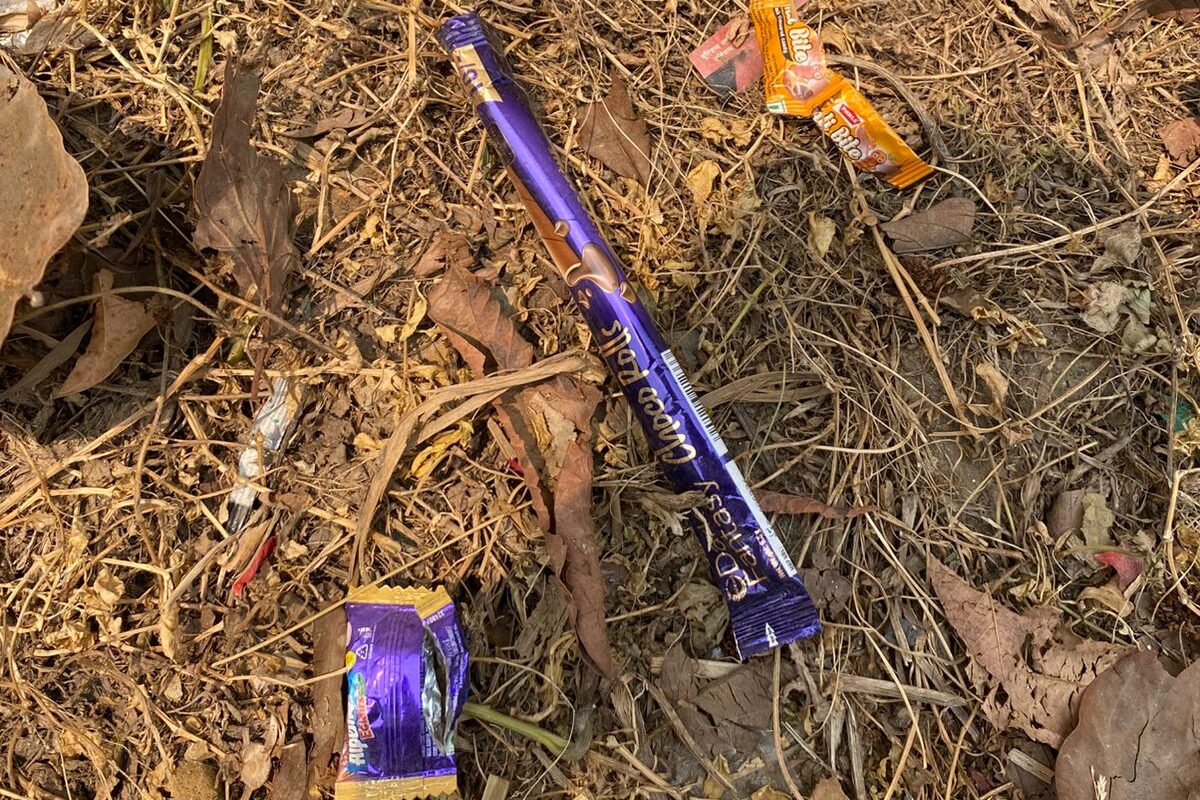
People informally burn a portion in backyard fires and roadside waste piles, or dispose of it through poorly managed municipal systems. Burning multilayer plastics at low temperatures does not result in clean combustion. It releases a major toxin called dioxins, highly toxic chemicals formed when plastics burn in low-oxygen conditions. Other pollutants such as fine particles (PM 2.5) and volatile organic compounds worsen asthma, heart disease, and air quality. The same burning process also releases carbon dioxide and methane, while black carbon from the smoke traps heat in the atmosphere, linking local burning directly to global warming and climate change.
Why is this a System Problem and not a Behavior Problem?
Working inside the waste management system has changed how I understand this issue. Before, I used to think public behaviour; littering, poor segregation habits, and a lack of care caused the core problem.
These factors matter and deserve attention, but they do not address the root cause.
Manufacturers designed and marketed chocolate wrappers and other low-value plastics without any viable plan for what would happen to them afterward. The manufacturer’s responsibility ended at the point of sale. The cost of disposal was quietly transferred to the city, rivers, to waste workers, and public health.
This is where Extended Producer Responsibility (EPR) becomes essential. EPR is a policy framework that requires manufacturers to take responsibility for the end-of-life of their packaging through collection programmes, redesign toward recyclable materials, or direct funding of processing infrastructure. Several countries have implemented binding EPR frameworks that shift responsibility for plastic waste from municipalities to producers and reshape how packaging is designed and managed. In India, EPR rules require producers to meet mandatory collection and recycling targets, pushing companies to take greater responsibility for managing post-consumer waste and engage more directly with waste systems and informal workers. In California, SB 54 goes further by linking EPR to plastic reduction itself, forcing a rethink of packaging design rather than just funding disposal. Nepal has not yet adopted a binding EPR framework for plastics, leaving producers without enforceable responsibility for the waste their packaging generates.
Until that changes, the gap between what Kathmandu’s system can handle and what it actually receives will keep widening and low-value plastics will keep filling that gap.
What can Actually be Done?
This is not a problem without solutions. It is a problem without adequate pressure to implement them.
At the individual level, habits matter at the margin. Buying larger pack size reduces wrapper count. Choosing products with simpler, sustainable packaging where available, even occasionally, sends a signal. For example, opting for paper packaging or glass jars instead of thin or shiny plastic wrappers, multilayer packaging, or single-use plastic sachets reinforces demand for better design choices. Proper waste segregation at the household level, while it will not save a chocolate wrapper today, preserves the recyclable materials that can be saved and builds the habits that a better system will eventually need.
At the industry level, manufacturers operating in Nepal’s market need to be part of this conversation and eventually, part of a binding framework. Redesigning packaging for recyclability, investing in collection infrastructure, or participating in take-back programmes are not radical tasks. They are standard practice in markets where EPR is enforced.
At the policy level, Nepal needs a clear, enforceable EPR mechanism for plastic packaging. This is the lever that makes everything else more viable, it creates the economic incentive for collection, the funding for processing infrastructure, and the accountability that currently does not exist.
But all three actions still leave one problem unresolved: LVPs have no market value. That is the core reason collectors skip the wrapper. EPR matters precisely because it forces producers to create the end market that does not exist, making LVPs worth collecting, which makes source separation rational, which turns behaviour change from symbolic to real. Value at the end of the chain builds the chain.
Even then, low-value plastics will not disappear. Some already sit in the environment. Others will keep entering the system even as volumes shrink. The goal is not elimination but accountability, giving these materials a destination and a responsible party.
I started this piece admitting that I work in waste management and still cannot do anything useful with my chocolate wrapper. That gap is exactly what needs to be closed. The wrapper is not the problem. The system that was never designed to handle it is.